
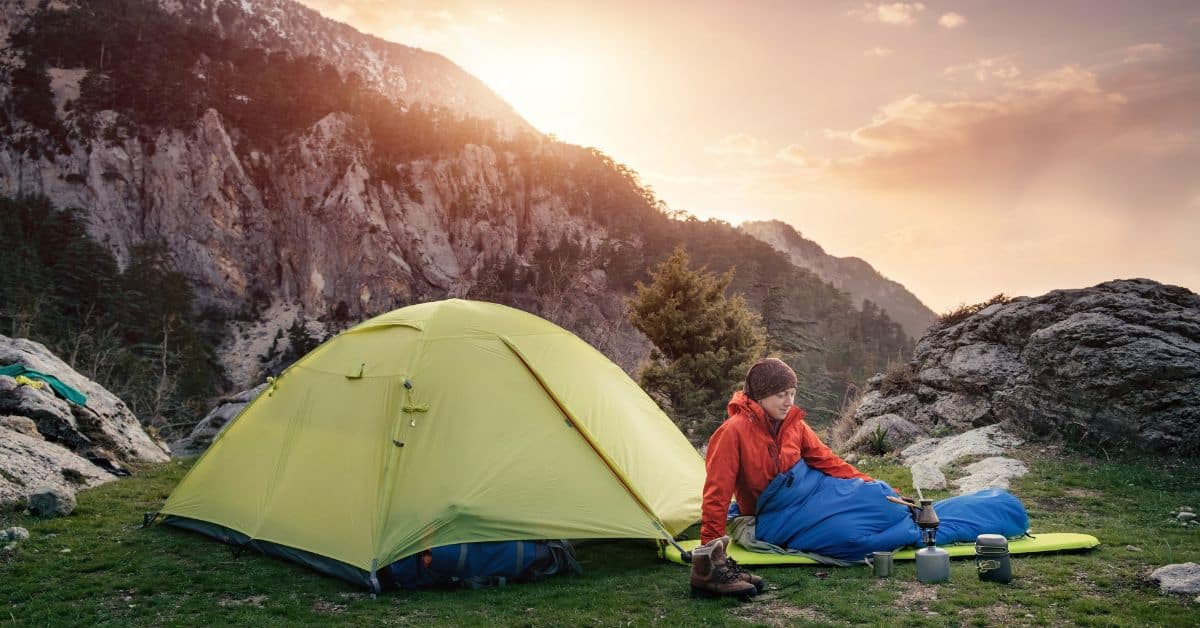
Mountain Sleeping Bag: How to Choose the Best One
If you're someone who needs to get out of the city and get lost in the mountains, stick around because we're going to take a look at this healthy habit and its benefits. We're going to focus on the mountain sleeping bag, which is more than just a necessary item; it needs to be the best so you can rest in nature as if you were in your own bed.
How to choose the best mountain sleeping bag?
The most important thing is to be clear about what we are going to use it for. Mountaineering is completely different from spending a summer night in the middle of a forest. Only you know what needs you want to meet when it comes to sleeping outdoors. Whether a thin bag or an expedition bag for sleeping at high altitudes is a good choice.
If you're clear about it and have identified your needs, we'll show you different parameters that will guide you in choosing the one that best suits you. Keep in mind that these details are important to know before making a purchase. Just as you are clear about what type of cooler you would take to a campsite, the sleeping bag should not only be the best but also the most practical.
The mountain sleeping bag should keep you warm in winter so you wake up ready for adventure.
A mountain sleeping bag or any type of garment does not generate heat directly; the temperature your body gives off remains in the bag and is stored there. The more it inflates and the larger its volume, the more heat it will accumulate, allowing you to sleep in low temperatures.
It's important to consider:
- The amount of filling.
- The quality of the filling.
For example, a down-filled mountain bag expands more than synthetic fiber, therefore, it will be warmer. And if we compare two down bags of equal weight but different qualities, the higher quality one will have a greater capacity to expand and, therefore, will be warmer. Look at the labels of mountain sleeping bags and you'll get it right.
Should I go for a heavier or lighter mountain sleeping bag?
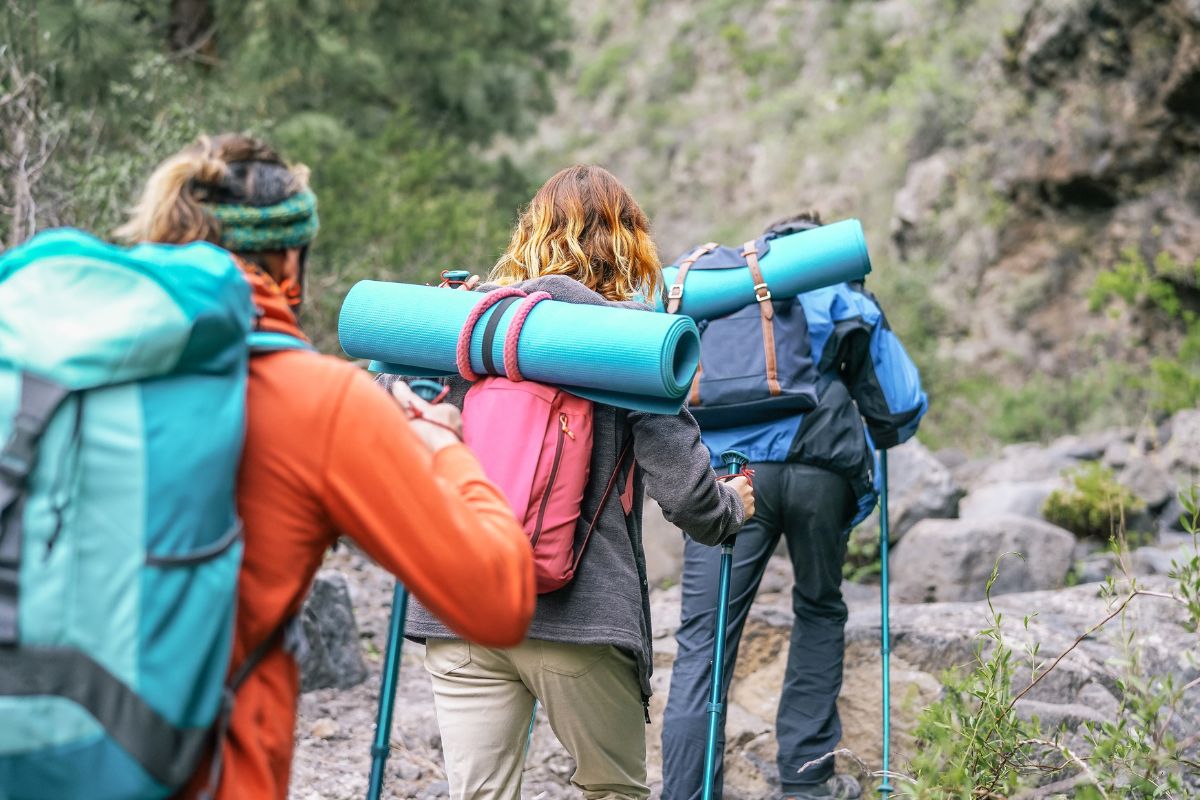
Once we know which sleeping bag is suitable for the temperature of the place we are going, we need to consider its weight. Yes, its weight is also important because to achieve that temperature and keep us warm, the filling is essential, but so is the outer fabric. As we have seen, the better the warmth-to-weight ratio, the warmer and more expensive it is. And vice versa, if the material is lighter, the cost will be lower.
Regarding the outer fabric, high tear resistance can mean excessive weight, allowing for greater compression and, of course, a smaller volume once folded. If we opt for a cheaper fabric, to achieve that resistance we will need a greater thickness. Don't forget that you are looking to protect yourself from cold and humidity, and that is achieved with quality fabric.
Sleeping bag materials: down or synthetic, you choose
If we think of a mountain sleeping bag that should protect us from the cold, down will undoubtedly be the best option due to its expansion capacity and low weight, which do not hinder its thermal capacity. It compresses easily and provides a lot of warmth.
The advantages of down are:
- Greater heat retention capacity at a lower weight.
- There are different qualities, measured by the garment's Cuin (fill power, measured in Cubic Inches); the 90/10 down/feather percentage indicated by brands is the highest.
Disadvantages:
- Its price is higher.
- It performs worse in humid conditions because it loses its properties.
Unlike down, synthetic fiber does not create a three-dimensional space; it creates a barrier. For this reason, with the same weight, it has less thermal capacity. It compresses less, but weighs more. In recent years, fibers that mimic down have emerged. Fiber performs better than down in humid conditions.
What size should you choose for your mountain sleeping bag?
In case you didn't know, mountain sleeping bags come in sizes, and it's very important that they fit our size as closely as possible. If not, there will be more space to heat with our body heat, and therefore, the bag will be colder.
Don't forget that we must fit entirely (head included), and since we want to sleep comfortably, we need to choose the right size.
Choosing the ideal shape for our sleeping bag is essential
The shape of a mountain sleeping bag is usually "mummy" style, although some for warm-weather camping are "blanket" style. The former have the advantage that their hood and internal collar close off the space from the cold, which is the opening for the face. It is advisable to sleep with a long-sleeved shirt and a hat.
Blanket-style bags can be opened, and most can be zipped together to form a double sleeping bag. "Mummy" bags also have a side zipper, although it usually doesn't reach the foot area.
Do you know how to choose the best mountain sleeping bag now?

Leave a comment
This site is protected by hCaptcha and the hCaptcha Privacy Policy and Terms of Service apply.